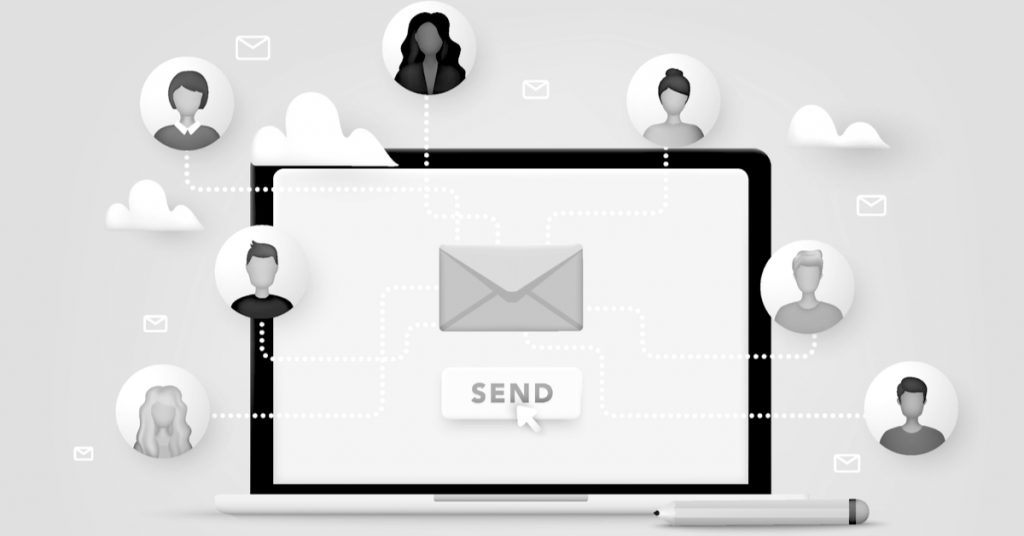
eDM marketing – or Electronic Direct Mail marketing – are the countless emails that fill your inbox each day. Whether it’s the latest sale at your favourite store or a weekly update from that company you somehow accidentally signed up for, there are so many things eDM marketing can cover.
However, how many of these emails do you ever actually open? Or do you hit the delete all button straight away? As a business, writing an eDM can feel like an easy task, but it takes something special to stop someone scrolling in their tracks, and get them to open your email.
Strap yourself in, it’s time to learn how to write a killer eDM for your business. And if you’re looking for more great tips for email marketing that doesn’t suck, we highly recommend this great read by Bobby Klinck.
What to include to stand out from the spam
Stopping people from deleting your email straight away is no easy feat – you only have a few seconds to grab their attention. So, like a first impression, make sure it counts!
Here are some of our top tips to help you put together email campaigns that convert.
Hook them with the subject line
The subject line needs to be something catchy that will grab the reader’s attention straight away. Whether it’s a clever pun, a promise the audience will gain something from opening or attention-grabbing keywords, you need to make an impression as soon as your audience sees the subject line. Keep it short and sweet – your subject line should only be three to seven words (around 50 characters). Try and think of yourself – what would get you to open this email? If what you’ve got written wouldn’t convince you to open the email, chances are it wouldn’t convince your audience either.
Trying out things like A/B split testing allows you as a business to see which option performs better. Testing out sending an eDM with a couple of different headings to see whether one yields better results than the other. There are also tools out there that analyse your headline, which may be of value when coming up with your subject line.
Want to know more? Read our blog on A/B split testing.
Nail the preview text that follows
The preview text is the text that follows your headline, and often will be the make or break as to whether the person you’ve hooked will open your email or delete it. Depending on what eDM marketing platform you’re using, you may not get the choice on what to include, as it will automatically add your first sentence. However, if you get the opportunity to add preview text, grab it with both hands! This section is the part where you need to tell your audience WHY they need to open your email in one sentence. Like the subject line, use catchy, attention-grabbing language to entice your audience.
Don’t be spammy
While we talk about being attention-grabbing, there needs to be a line drawn. You want to jump out at your audience, but you don’t want to do anything that will put you in the ‘spam’ folder. Things like having the subject line in all capital letters can seem like you’re shouting at your audience – don’t be that company! Other spam-like things to avoid are words like ‘buy’ or ‘free’ which may seem innocent but can trigger the spam filter.
Choose the right words
Crafting the right eDM once your audience has opened the email is crucial. The body of your email needs to contain information that will drive the reader to act the way you want – whether it’s purchasing your product, signing up for your course or program, or taking up one of your services. Optin Monster talks about the importance of using psychology in your emails. This means things like:
- Generating a sense of FOMO (Fear OF Missing Out). Limited time discounts or limited-edition products create a sense of urgency and the need to ‘act now.’ Using language that insinuates scarcity or even curiosity drives people to click.
- Use images of faces as they can elicit the same emotion shown.
- Colour choice matters as different colours create different reactions.
Customise the experience through segmentation
You may know to personalise your eDM’s to include the recipient’s name, but personalisation goes beyond this. If your audience has different segments and age groups to it, they’re all going to be looking for something different. Many CRM tools allow you to segment your eDM before sending, whether that be by age, location, or gender. When you segment your emails, you are able to write better, more personalised emails as you can talk directly to the audience you’re targeting.
Add a call to action that’s hard to ignore
Your reader has made it to the end of your email and now, you need to get them to convert. Your email call-to-action should be extremely easy to identify. It might be a button in a different colour that stands out from the rest of the email or a catchy sentence. This button or link needs to take the audience somewhere. That could be to a product page, registration page or even a downloadable you created – it’s where you’ll get the conversion. However, it’s important to keep in mind that the CTA should be something that adds value for the customer – it’s not about you.
Some other points to note
Having great copy is imperative in getting your audience to convert. However, there are a few other things to keep in mind:
Get to know your target audience
Getting to know your target audience allows you to further personalise your audience. Creating customer avatars will let you get to know your customers a bit better. Finding out their pain points and where they’re looking for will give you a much higher chance of converting. Creating these avatars will also help you in other areas of your business, such as where these segments of your audience get their information, their goals and values and their purchase process.
Haven’t created your customer avatars? Download our free template to create yours now.
Write for the readers
It might feel tempting to use a neutral or even a sales-y voice when writing an email. But with eDM marketing, it’s all about the receiver. You need to write for the person rather than write as you would for something like a business update. Choose a tone that is relevant to how your audience might be feeling when opening your email. If it’s something exciting, get your audience hyped up. If it’s more sombre news (such as Coronavirus updates), use an empathetic or reassuring tone of voice.
Want to know more? Here are 5 things to keep in mind when writing an email.
Less is more
When it comes to email marketing, less is more. If your email is one containing a lot of information, try not to have huge chunks of text.
People don’t often sit down and read their emails in detail unless it’s something extremely relevant to them. If you need to share a lot of information, consider creating a blog post or news update on your website that you can link people to. This will allow you to include a few main points, with your call to action directing them to the extra information. Many people skim through their emails too, so having lots of images or visuals is often the way to go rather than big amounts of text.
eDM marketing is a great way for businesses to communicate with their target audience. It allows you to get across a message and drive conversions. There are a few things to keep in mind when it comes to structuring a killer eDM, including having a catchy subject line, writing for your audience, and keeping your copy spam-free. If you’d like help writing eDM’s for your business, send us an email or DM us on Instagram.