
Ethical marketing has become a key differentiator for brands in an era when consumers are more informed and values-driven than ever. It extends beyond selling products to building trust, fostering transparency, and prioritising social responsibility. Ethical marketing is crucial for businesses looking to develop long-term customer loyalty and a strong reputation.
So, what exactly is ethical marketing, and how do you stand out from the rest without straying into the unethical greenwashing territory? Read on to find out our thoughts.
What is Ethical Marketing?
Ethical marketing promotes products and services in a way that is honest, transparent, and aligned with moral principles.
It involves truthfulness in advertising, responsible data usage, fair pricing, and a social and environmental impact commitment. Unlike traditional marketing, which sometimes prioritises sales over integrity, ethical marketing ensures business decisions consider their effect on customers, employees, communities, and the planet.
To support and guide businesses on ethical business practices, the World Fair Trade Organization (WFTO) developed a set of ten fair trade principles for companies to adhere to.
These principles ‘specify the ways that Fair Trade Enterprises are set up and behave to ensure they put people and the planet first’, and closely align with the United Nations (UN) Sustainable Development Goals (SDGs).
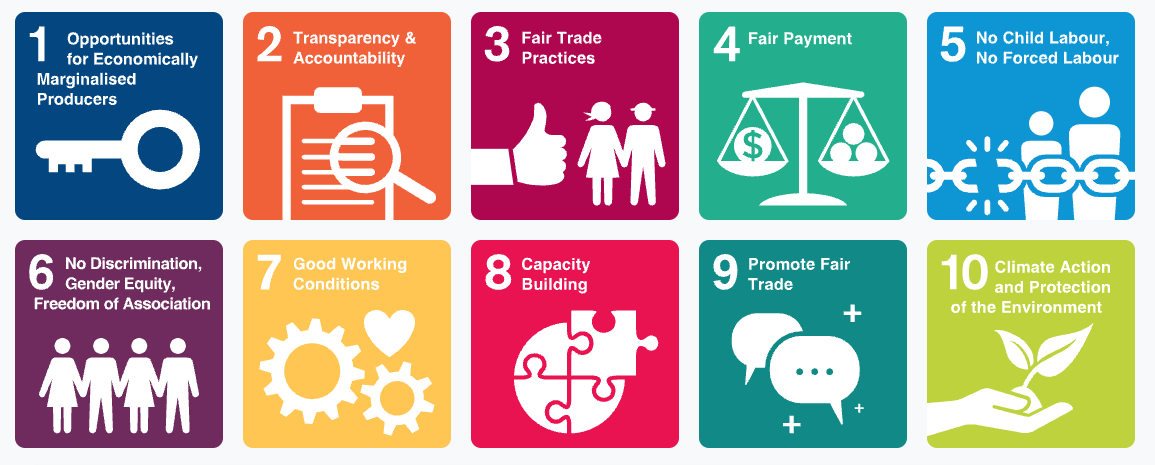
Source: World Fair Trade Organization
What is Greenwashing?
Consumers are becoming more aware of ethical practices, with the desire to purchase goods and services from ethical companies increasing. However, some businesses are capitalising on our desire to purchase from businesses doing ‘good’ and, as such, greenwashing is leaking into a lot of marketing.
Earth.Org defines greenwashing as ‘when a company or organisation spends more time and money on marketing themselves as being sustainable than on actually minimising their environmental impact.’
Sometimes, greenwashing is easy to spot. Other times, it’s a little trickier. When trying to spot greenwashing in the wild, here are some things to keep an eye out for:
- Vague, ‘fluffy’ language with no tangible evidence behind it (e.g., ‘eco-friendly’, ‘produced responsibly’, etc.).
- Making dangerous products appear ‘safe’ (e.g. ‘eco-friendly’ cigarettes).
- Using jargon – for example, language only a scientist or someone in the industry would understand and could fact check.
- Offering no proof of what they’re claiming to be/do.
- Emphasising one aspect of their business that’s ‘green’ while everything else is unethical or questionable.
- Companies that aren’t transparent and don’t admit to making mistakes.
The Four Principles of Ethical Marketing
As a business, there’s no one-size-fits-all approach when it comes to ethical marketing. It must be something you’re passionate about and willing to implement.
Despite there not being a templated approach, there are some recommended principles you should adhere to.
1. Honesty and Transparency
Consumers expect brands to be truthful about their products and services. Misleading claims, exaggerated benefits, or hidden terms can damage trust and lead to customer dissatisfaction. Ethical marketing requires brands to:
- Provide accurate product descriptions.
- Disclose all costs upfront.
- Use clear and honest messaging in campaigns.
For example, if a company markets a product as ‘eco-friendly,’ it should provide clear evidence to support this claim rather than using vague or misleading language which leads into greenwashing territory.
2. Consumer Privacy and Data Protection
With the rise of digital marketing, businesses collect vast amounts of customer data. However, using this data responsibly is a pivotal part of ethical marketing. Brands must ensure:
- Clear communication about how customer data is collected and used.
- Compliance with data protection regulations (such as the Australian Privacy Principles).
- No unauthorised sharing or selling of personal information.
In 2022, Optus, a major telecommunications company, was involved in a significant cyber-security attack that leaked millions of customers’ private information. After extensive investigations, Optus was deemed to be at fault for breaching numerous privacy laws, including unsecured API exposure, inadequate security measures and insufficient data protection.
You can read more about this attack and how it impacted the company’s reputation here.
3. Social Responsibility and Sustainability
Modern consumers are increasingly conscious of their impact on society and the environment, with a recent study finding 70% of Australians would like to change their shopping habits to reflect more ethical practices.
When it comes to ethical marketing, social responsibility and sustainability, businesses can ensure they are:
- Sourcing materials and products sustainably.
- Reducing waste in packaging and operations.
- Supporting social causes and charitable initiatives.
International brands like Patagonia have successfully integrated sustainability into their marketing strategies, proving that ethical commitments can enhance brand value and customer loyalty.
Closer to home, Roving Refills is a small Frankston-based business that ‘provides people with locally made, eco-friendly alternatives to highly packaged products that have travelled many miles and are not waterways-safe.’ The company is one of many local businesses dedicated to reducing plastic in the community.
4. Fair Pricing and Accessibility
Pricing is a key component and is often viewed as a barrier to consumption, especially with the increasing cost of living. However, ethical marketing ensures a business’s pricing strategies are fair and accessible to consumers. It avoids exploitative practices such as price gouging or hidden fees. Offering high-quality products at a reasonable price while being transparent about costs reinforces customer trust and brand reputation.
5. Diversity, Equity, and Inclusion
Inclusive marketing is an essential part of ethical marketing. An equitable world is a world free from bias – especially when it comes to minority groups. Businesses should strive to:
- Represent diverse voices and perspectives in their communications.
- Avoid stereotypes and discriminatory language.
- Make products and services accessible to all consumers, including those with disabilities.
An example of a company that has embraced inclusivity in its marketing is Mattel, the creator of the famous card game Uno. Mattel recently designed a colourblind-accessible game that allows the 300 million colourblind people worldwide to play the game as their friends would.
View this post on Instagram
To learn more about accessibility in marketing and business, read our blog.
The Benefits of Ethical Marketing
Aside from making a difference to the community and planet, embracing ethical marketing can bring tangible benefits to your business.
Builds Customer Loyalty
Consumers are more likely to stay loyal to brands that align with their values. A KPMG study on the Australian retail outlook found 67% of people will buy from and remain loyal to businesses that go beyond sustainability and take action and accountability in reversing ecological damage to the environment.
Enhances Brand Reputation
A strong reputation takes years to build but can be damaged in seconds. Ethical marketing protects a brand’s credibility and fosters positive relationships with stakeholders, from customers to investors.
Attracts Ethical Consumers
With growing awareness of social and environmental issues, many consumers seek ethical brands. Ethical marketing positions businesses as leaders in corporate responsibility, attracting like-minded people who prioritise values over price.
Improves Employee Satisfaction
Employees want to work for companies that operate with integrity. A strong ethical foundation creates a positive workplace culture, increasing employee morale and retention.
Reduces Legal Risks
Unethical marketing practices can result in legal consequences, including fines and lawsuits. Adhering to ethical standards ensures compliance with regulations and reduces the risk of legal action.
Get Started with Ethical Marketing
Feeling overwhelmed? We don’t blame you! If your brand is new to the ethical marketing world (welcome!), here are some ways you can start:
- Assess your current practices: It’s always best to start with what you’ve got. Conduct an audit to identify areas where ethical improvements can be made.
- Set clear ethical guidelines: This means establishing internal policies that align with ethical marketing principles.
- Educate your team: Ensuring everyone is on the same page means no mixed messages when engaging with stakeholders. Train your employees on responsible marketing and consumer transparency, or if you’re unsure where to begin, seek education from a third party.
- Communicate authentically: Be open about your ethical initiatives, successes, and challenges. Let your consumers know you’re working to improve, and they’ll appreciate you more for it.
- Engage ethical partners: Collaborate with suppliers and businesses that share your values. This may mean starting small with something like printing with a company that uses recycled paper or vegetable inks.
- Monitor and improve: There will likely be some hiccups along the way or learning opportunities, especially as the world and what’s considered ‘best practice’ constantly change. Ensure you regularly review ethical marketing strategies for continuous progress.
Ethical marketing is a movement shaping the future of business and consumer behaviour. By prioritising honesty, social responsibility, and consumer trust, brands can create meaningful connections with their audience while driving sustainable success. In a world where consumers increasingly hold businesses accountable, ethical marketing is the key to building a brand that thrives while making a positive impact.
At Oraco Agency, we believe ethical marketing is the foundation of lasting brand success. Get in touch with the Oraco team today if you want to refine your strategy, enhance transparency, or integrate sustainable practices.