OPINION PIECE
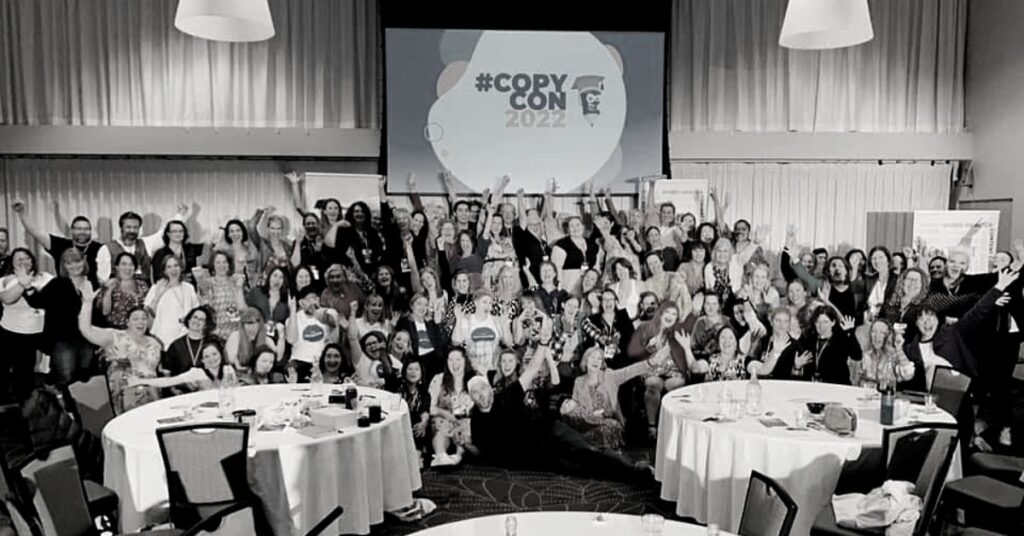
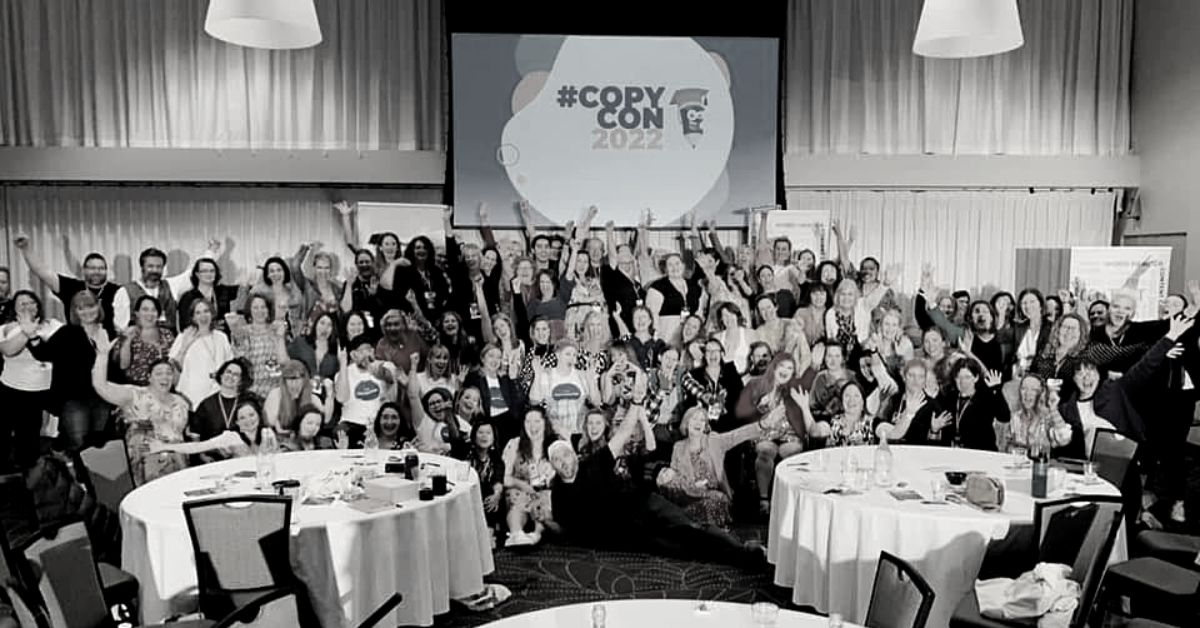
Bean bags, belly laughs and Benedict Cumberbatch cutouts. These were only some of the things present at CopyCon 2022, run by Kate Toon’s The Clever Copywriting School. But aside from the free lunchtime massages, designated ‘chill out’ zone, and mountain loads of delicious food was a wealth of knowledge delivered by 18 fantastic speakers spread across the two days. Between the ‘Mastermind’ day on Friday and the official conference on Saturday, the learning was non-stop!
While it’s all still fresh in my mind, I thought I’d share the top five things I learnt at CopyCon.
1. Be DIFFERENT!
Ok, so I know that this one is pretty cliché, but the importance of it within your copy is crucial. During Kate Toon’s (CopyCon’s host’s) presentation, she spoke about how being different boosts your writing. Instead of listing the features and benefits of a product or service as many places do (this isn’t necessarily wrong, just another approach), come at it from a different angle. Think of a story you could use, an interesting statistic, an emotional appeal or something original that will not only capture your audience’s attention but stand out from the crowd.
Look at the demand in your industry as well as your peers. What does the market want? What are your peers offering? What are some of the most common enquiries you receive? These questions will help you figure out what’s already present in the market and how you can create original copy.
2. Know your ‘why’ and then take yourself out of it
At Oraco, we’ve spoken a lot about finding your ‘why’ which is why we loved hearing Samantha Leith talk about it during her presentation. She is an incredible speaker who discusses the ‘four C’s’ of your x-factor: clarity, confidence, charisma, and courage. Finding your ‘why’ comes under the clarity aspect and is about determining why you’re doing what you’re doing so you can communicate this to your audience.
Samantha explained the importance of finding your ‘why’ and then taking yourself out of it. Many businesses fall into the trap of talking to the customer without considering their perspective. Taking yourself out of the picture means that your writing will flip. Instead of telling your consumers why your product is the best, tell them how it can help them solve a problem. By being more conversational and relatable, your audience is more likely to engage.

3. Writers are expected to be instant experts
This was probably one of my favourite quotes from the entire conference! Jonathan Crossfield gave a fantastic presentation around fact-checking and the fact that writers are expected to be instant experts. A lot of what we see on the internet isn’t necessarily true. Sometimes it has been passed down from source to source – like a game of Chinese whispers – distorting the ‘truth’ behind it and often being taken out of context. I started looking for a statistic on the percentage of people who believe what they read online, but as you can imagine, that turned out to be a wormhole I wasn’t keen to brave.
However, many of us do take what we see online at face value – especially from what we believe are reliable sources (such as online news articles, etc.). It’s relatively unlikely that we’ll take a moment to double-check the accuracy of the ‘fact’ we just read, which is how misinformation spreads – something we witnessed on a larger scale during the pandemic.
Writers are expected to be instant experts, as many of us assume that if something is printed, it must be true. That’s why fact-checking from reliable sources can help improve your writing and make you more credible. We all know that Wikipedia isn’t a reliable source of information, but there are so many other similar sites out there that we never check.
4. Create an open loop in a very limited amount of space
You don’t get a lot of space on social media ads to grab your audience, so you need to create an open loop in the limited space you have. Andrew Hubbard taught us all about social media ads and how to write ads that convert. With a strong focus on Facebook and Instagram ads, he discussed how you need to create an open loop to keep your audience interested. The loop Andrew was talking about refers to a few different things. Open loops can be used to:
- Add a sense of mystery
- Deliberately leave out information
- Break your content into parts
- Delay endings
All these tactics aim to increase audience engagement and drive conversions. However, there is only a limited amount of space on Facebook and Instagram ads to create this loop, meaning writers essentially need to get to the point and build this intrigue in only a few words.
5. Life is short. Make the most of EVERYTHING
Lastly came one of the most inspiring presentations of the weekend by Mariska Threadgold. She told a story of her dad being diagnosed with terminal cancer and told he only had six weeks to live. Being told that his days were numbered meant that his perspective on life changed, and he made sure he made the most of his time left. Mariska emphasised that none of us know how long we have left on this earth and that life’s too short not to be doing something you love and ticking off bucket list items. It was such a touching presentation and put into perspective stressors we have that often won’t matter in the future.
After two huge days at the CopyCon conference in Sydney, it’s fair to say that I’m still on a high and bursting with ideas that I can’t wait to implement. If you’d like to find out more about the significant impact copy can have on your business or want to breathe some life into your existing copy (or even learn more about CopyCon!), send us an email at hello@oraco.com.au or get in touch on Instagram.