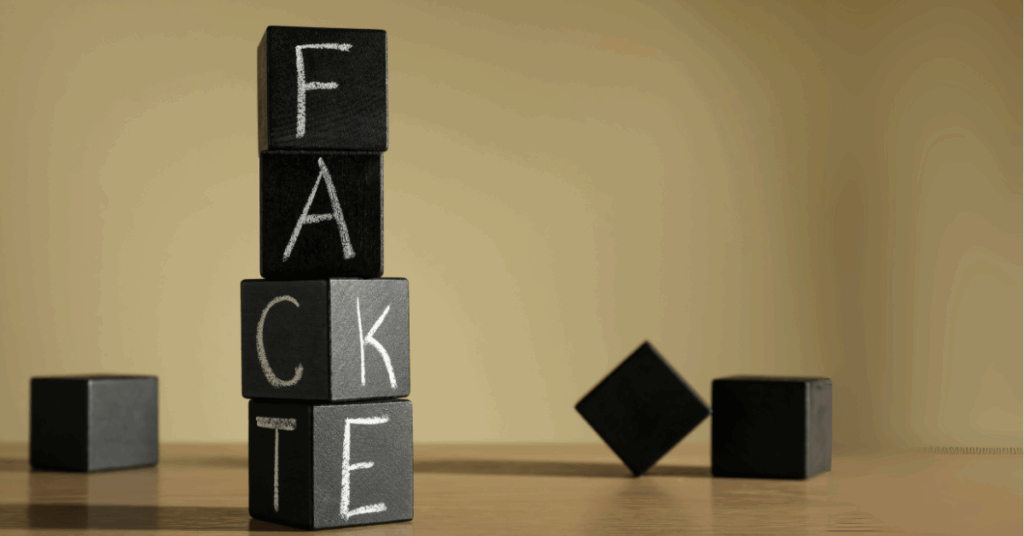
Sorting Through Misinformation and Fake News: How to Know What’s Legit

Misinformation

In today’s fast-paced digital world, information travels faster than ever. Unfortunately, so does misinformation. Whether it’s a misleading headline, a dodgy infographic or a completely made-up ‘fact’ circulating on social media, fake news is everywhere. It can be frustrating (and even dangerous) to navigate, especially when you’re trying to stay informed. So, how can you tell what’s legit and what’s made up? Here’s how to tell and how to ensure your business doesn’t fall into the trap of circulating misinformation.

What Exactly Is Misinformation?

Before we dive into the how-tos, let’s get our definitions straight.

  • Misinformation: False or inaccurate information, regardless of intent. It might be a genuine mistake, like someone misquoting a statistic or sharing an outdated news article, thinking it’s current.
  • Disinformation: A bit more sinister. It’s false information spread deliberately to mislead people, usually for political, financial or ideological gain.
  • Fake news:  A term that gets thrown around a lot, often unfairly, but generally refers to fabricated stories presented as news, often with the intent to deceive or provoke.

These all fall under the umbrella of ‘information disorder’, and unfortunately, the internet is riddled with it.

Why is Misinformation Such a Problem?

Let’s be honest: we’ve all probably shared a post without checking its source at some point. It’s easy to do, especially when something triggers a strong emotional reaction, like outrage, fear, or even hope. The algorithms on platforms like Facebook, Instagram, TikTok and X (formerly Twitter) are built to amplify this kind of content because it grabs attention.

The problem? It means misleading information often spreads faster than the truth.

Misinformation can skew public opinion, fuel conspiracy theories, undermine trust in institutions, and even put people’s health and safety at risk (remember the chaos around COVID-19 vaccinations?). That’s why it’s so important to fact-check all information your business is putting out.

Seven Ways to Spot Misinformation (And What to Do About It)

Here are some practical steps you can take to sort through the noise and figure out what’s worth believing – and sharing.

1. Check the Source (And Then Check It Again)

Ask yourself: Where is this information coming from? Is it a reputable news outlet, a government or health organisation, or a random blog? A good source will usually have an ‘About Us’ page, clear contact details and a history of factual reporting. If the website looks like it was made in 2005 and has more pop-ups than actual content, give it a miss.

If you’re unsure, Google the source. See if others have cited them, what their reputation is like, and whether they’re known for factual reporting or pushing an agenda.

2. Look Beyond the Headline

Clickbait headlines are designed to spark an emotional reaction. They might exaggerate, twist the truth, or completely misrepresent the actual article.

Before sharing something, read the full piece. Headlines can be misleading, but the article itself may offer more nuance or context. If there’s no article at all, just a dramatic headline and a blurry meme, that’s a red flag.

3. Check the Date

Old news isn’t necessarily fake, but it can be misleading if it’s being reshared without context. A story from 2017 about a natural disaster or a political decision might pop up on your feed again today, and cause unnecessary panic or confusion.

Always check when something was published before taking it at face value.

4. Cross-Check with Other Sources

If a claim seems shocking or too good to be true, do a quick search to see if other credible sources are reporting the same thing. Major stories are usually picked up by multiple outlets. If only one obscure site is covering it – or if every article making the claim links back to the same original (and sketchy) source – be sceptical.

Fact-checking websites like the ones below are great tools for confirming or debunking viral claims:

5. Reverse Image Search

Images can be powerful, but also incredibly misleading. A shocking photo might actually be from a completely different time or place, and now, AI is producing scarily life-like images.

Using a tool like Google Reverse Image Search or TinEye lets you upload an image and see where else it’s appeared online. You might find that ‘photo of recent floods’ is actually from 2012, or the ‘celebrity scandal’ picture was taken wildly out of context.

6. Watch Out for Emotional Manipulation

Misinformation often plays on your emotions, particularly anger, fear or moral outrage. If a post makes you feel instantly furious or shocked, pause before you react. Ask yourself: Is this designed to manipulate me?

Taking a breath before you click ‘share’ can go a long way.

7. Think Before You Share

You don’t have to become a full-time fact-checker, but a quick sense check can make a big difference. If you’re not sure something’s legit, it’s okay not to engage. Misinformation thrives on amplification, so choosing not to share is often the best move.

But What About AI-Generated Content?

With the rise of technology like ChatGPT and Gemini, we’re entering a new era of information confusion. AI-generated text, images and videos can be incredibly convincing, which makes fact-checking more important than ever.

At the moment, AI is a tool that can be used for good or otherwise. Like any technology, it’s about how people choose to use it. But as a reader or consumer, staying curious and sceptical (without tipping into full-blown paranoia) is key.

Staying Informed Without Feeling Overwhelmed

Let’s be honest – trying to keep up with everything can feel exhausting. But here’s the good news: you don’t have to fact-check every single post or read every article under the sun.

Instead, aim to follow a few trusted sources, diversify where you get your news from, and keep your critical thinking hat firmly on. Encourage open conversations, ask questions, and don’t be afraid to say ‘I’m not sure – let me look into it.’

What Can We Do to Help?

We’re living in an age where information is everywhere, but so is misinformation. The good news? You’re not powerless. By staying alert, asking questions and thinking before you share, you can help cut through the noise and contribute to a more informed, thoughtful online world.

And if you’re a brand or business? Helping your audience understand the truth and providing reliable content is one of the most valuable things you can do.

At Oraco, we’re passionate about building brands that lead with clarity, integrity and purpose. If you’re looking to communicate with your audience but need a hand with delivering the message, get in touch with us today. 

Ready to build, nurture or evolve your brand?

Get in touch
Contents
Rebranding doesn’t mean erasing everything that came before. 

If you’ve been in business for five, ten or twenty years, you’ve already built recognition, reputation, relationships and stories that have value.

The interesting part is working out what still belongs.

What should stay? What has the business outgrown? What needs to evolve? And what would you be crazy to leave behind?

A rebrand should make room for where you’re going, while still feeling unmistakably yours.

Think you might have outgrown your brand? Take another look.

Brand + rebrand projects now booking. Visit our link in bio to book a chat.
.
.
.
.
.
.
#Branding #Rebrand #BrandStrategy #BrandIdentity
I’ve always been fascinated by symbolism 🌀

By how a single mark, image, word or gesture can represent something far bigger than itself. Across cultures and civilisations, we’ve used symbols to communicate identity, beliefs, stories, belonging and ideas that sometimes go far beyond what words can explain.

And somewhere along the way, I realised that’s also how I’d started to see brands.

A logo can become a symbol of what a business stands for. A colour can carry years of recognition. A phrase can represent an entire belief. A story can become shorthand for where a business came from and why it exists. Iconography can represent services, philosophies, products or ideas.

What we see on the surface carries meaning because of everything sitting behind it.

Over nearly two decades of working in branding, I also began noticing the same themes appearing again and again in the businesses people really remembered.

Their past, beliefs, future, people, identity, expression, impact and longevity.

Eventually, I gave each of those ideas a symbolic form.

They became Oraco’s Eight Brand Marks, and today they give us a way to look at a business from eight different perspectives and uncover the stories, ideas and meaning that make it distinctly its own.

The strongest brands aren’t built by adding meaning that was never there. More often, the clues already exist.

You just need to know where to look.

Explore the Eight Brand Marks via the link in bio.
One of the hardest things about running a business is knowing what actually deserves your attention.

When you're inside it every day, everything can feel important. The website needs updating, content needs creating, marketing isn't quite working, the messaging feels off. Someone suggests a new platform, another campaign or a complete change in direction. But more activity isn't always the answer.

A big part of Jessica's work, both through Oraco and the business owners she mentors, is helping people step back far enough to see what's really going on.

– What are you actually trying to achieve?
– Who are you trying to reach?
– What's already working?
– Where is the real disconnect?
– And what can probably wait?

Sometimes the most valuable strategy isn't adding another thing to the list. It's creating enough clarity to know what matters now, what comes next and what doesn't need your attention at all.

If you're looking for strategic advice, a fresh perspective and someone to keep you accountable to actually doing the things you said you were going to do, Jessica offers one-on-one business strategy and mentoring sessions. Shoot us a DM to find out more.
Last week, we lost someone very special.

Sean was a former Principal of Mannix College, a longstanding client of Oraco's, and someone I was lucky to get to know over many years.

I first met Sean in 2012 through my work with Mannix, and I remember instantly clicking with him. He was incredibly kind, funny, super organised and genuinely caring. He made working together easy, but he was also someone who took the time to get to know you beyond the work itself.

Every year, without fail, Sean would send me a Merry Christmas and Happy New Year message, always accompanied by a quirky little Bitmoji of himself. Even after he finished as Principal and we were no longer working together regularly, those messages continued. It's such a small thing, but I think it says a lot about the kind of person he was.

I've worked with Mannix since 2009, a relationship that now spans close to two decades, and Sean sits right in the middle of so many of those memories. He was there through an important chapter in my career and Oraco's growth, trusting us with Mannix for many years, and still making the effort to stay in touch long after our working relationship changed.

Looking back, it means a lot that such a longstanding professional relationship also brought someone like Sean into my life.

As the Mannix community gathers today to celebrate Sean's life, I'll be joining the service from home and thinking of his family, friends and everyone at Mannix. I had hoped to be there in person, but I'm glad I'll still be able to join everyone in remembering him.

Thank you, Sean, for your kindness, your humour and for always finding a way to put a smile on people's faces. You made a difference to so many people, myself included, and I'm very grateful our paths crossed.

Leanne x

Photo courtesy of Mannix College.
One year of @twobayslaundry 🤎

A year ago, Two Bays Laundry opened its doors with a brand we’d had the pleasure of helping Liz and Kirill bring to life from the very beginning.

From strategy through to the visual identity, we wanted to create a brand that felt fresh, organic and full of personality, but most importantly, one that felt like it belonged here on the Mornington Peninsula.

That sense of place became part of the identity itself. The curves within the logo draw on the movement of water and our coastline, while the stylised ‘B’ represents the two bays that gave the business its name, Western Port and Port Phillip. The coastal palette, natural textures and broader identity carried that story through the space (shout out to @saint.design.interiors), signage, uniforms, vehicles and everything in between.

It’s always pretty special seeing a brand move from ideas on a page into a real business, but even more so watching it become part of the local community.

A huge congratulations to Liz, Kirill and the whole Two Bays Laundry team on your first birthday. It’s been such a pleasure working alongside you from those early ideas through to launch and everything that has followed.

Happy first birthday! Here’s to everything still to come 🥂

ABOUT THE AUTHOR

Picture of Ellie Travica

Ellie Travica

Content Writer

Leave a Reply

Your email address will not be published. Required fields are marked *

Branding Agency

Join the Oraco Passage

Build, nurture and evolve your brand with our actionable tips and insights delivered straight to your inbox.